The Hidden Cost of Downtime: What One Hour of IT Failure Really Costs a Business
Even one hour of IT downtime can cost more than expected. Learn how outages impact productivity, revenue, and trust—and why proactive IT matters in 2026.

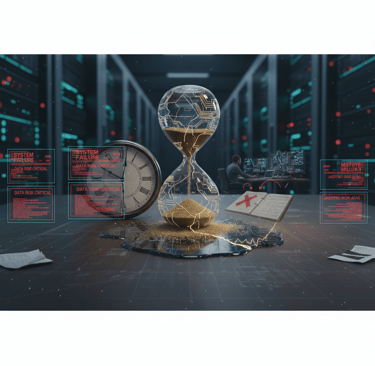
Downtime is often treated as a minor inconvenience—something that slows work briefly and then gets fixed. In reality, even short IT failures can have a significant impact. In today’s environment, technology doesn’t just support operations; it runs them. When systems go down, the effects are immediate and far‑reaching.
Downtime Is a Business Problem
An hour of downtime can quickly lead to:
Cancelled appointments or missed sales
Employees unable to work
Manual workarounds that introduce errors
Frustrated customers or patients
For clinics, dental practices, and service‑based organizations, downtime affects trust just as much as productivity.
The Hidden Costs Add Up
Beyond the outage itself, downtime often causes:
Reputational damage when systems are unreliable
Increased data risk during crashes or rushed recoveries
Ongoing productivity loss even after systems are restored
In many cases, the total cost of downtime is higher than the cost of preventing it.
Downtime Rarely Comes Without Warning
Most outages are the result of issues that develop quietly over time, such as:
Aging or failing hardware
Missed or delayed updates
Backups that haven’t been verified
Storage or performance limitations
Security alerts that go unnoticed
Reactive IT only addresses these problems after operations are already disrupted.
Prevention Matters More Than Fast Fixes
Modern IT is no longer about reacting faster—it’s about reducing incidents altogether. Proactive managed IT focuses on continuous monitoring, intentional updates, early risk detection, and verified backups to keep systems stable and reliable.
Downtime Is Still a Decision
Every business has an IT strategy, whether intentional or not. Choosing to wait for things to break is still a strategy—and one that accepts downtime as inevitable.
At FortiArc, we quietly maintain the stability businesses depend on, addressing issues long before they become disruptions.
Because when IT works the way it should, you don’t notice it at all.
Area of Expertise
Cybersecurity
Managed IT Services
Hardware and License Procurement