Your Employees Are Being Targeted Right Now — What You Need to Know About Phishing
Phishing has evolved beyond simple spam. Discover the modern playbook attackers use to target Toronto businesses and how to build a stronger "human firewall" for your company.
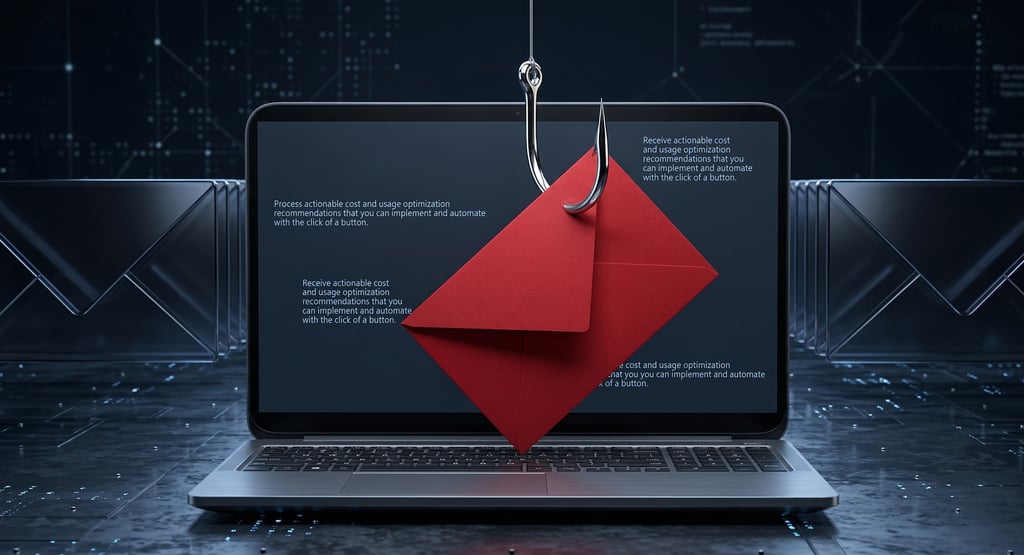
It doesn’t take a sophisticated hacker to bring down a business. Most of the time, all it takes is one employee clicking the wrong link.
Phishing attacks remain the #1 entry point for data breaches and ransomware infections worldwide — not because businesses aren’t investing in technology, but because attackers have gotten remarkably good at exploiting the one thing no firewall can fully protect: human judgment.
If your employees are connected to the internet, they are targets. Here’s what you need to understand — and what you can do about it.
What Is Phishing, Really?
Phishing is a form of social engineering where an attacker impersonates a trusted person or organization to trick someone into revealing sensitive information, clicking a malicious link, or downloading malware.
The name comes from “fishing” — casting a wide net and waiting for someone to bite. Most people picture obviously suspicious emails with broken English and foreign princes. But that’s not what modern phishing looks like. Today’s attacks are polished, personalized, and alarmingly convincing.
The Modern Phishing Playbook
Spear Phishing
Unlike broad phishing campaigns sent to thousands of random inboxes, spear phishing is targeted. Attackers research their victim — using LinkedIn, company websites, and social media — to craft a message that feels completely legitimate.
An employee might receive an email that appears to come from their CEO, referencing a real project, asking them to urgently process a payment or share login credentials. By the time anyone realizes something is wrong, the damage is done.
Business Email Compromise (BEC)
Business Email Compromise is one of the most financially damaging forms of phishing. Attackers either spoof or actually compromise a legitimate business email account — often an executive’s — and use it to authorize fraudulent wire transfers, redirect payroll, or request sensitive data from finance or HR teams.
The FBI has reported billions of dollars in annual losses from BEC attacks, and small and mid-sized businesses are disproportionately targeted because they often lack the controls that larger enterprises have in place.
Smishing and Vishing
Phishing isn’t limited to email. Smishing (SMS phishing) and vishing (voice phishing) use text messages and phone calls to achieve the same goals. Fake delivery notifications, urgent account alerts, and impersonation calls from “IT support” or “your bank” are increasingly common — and increasingly effective.
AI-Enhanced Phishing
Attackers are now using artificial intelligence to generate phishing messages that are grammatically perfect, contextually relevant, and tailored at scale. What used to require a skilled social engineer can now be automated. The volume and quality of phishing attempts are both increasing as a result.
Why Employees Fall For It
It’s easy to think “my team would never fall for that.” But phishing works because it’s designed to bypass rational thinking. Effective phishing attacks exploit:
Urgency — “Your account will be suspended in 24 hours.”
Authority — “This is a message from your CEO / IT department / CRA.”
Fear — “Unusual sign-in activity has been detected on your account.”
Curiosity — “See who viewed your LinkedIn profile.”
Trust — Familiar logos, email signatures, and sender names that look completely legitimate.
When someone is busy, stressed, or multitasking — which describes most employees most of the time — the instinct to respond quickly can override the instinct to verify.
The Real Cost of a Successful Phishing Attack
A single successful phishing attack can trigger a cascade of consequences:
Credential theft — stolen usernames and passwords used to access email, banking, or internal systems
Ransomware deployment — malicious attachments that encrypt your files and demand payment
Data breaches — exposure of client, employee, or financial information
Financial fraud — unauthorized wire transfers or payment redirects
Reputational damage — loss of client trust that can take years to rebuild
For small and mid-sized businesses without the resources to absorb these impacts, a single phishing incident can be existential.
How to Protect Your Business
Train Your Employees — Regularly
Security awareness training is the single most effective investment you can make against phishing. Employees need to know what modern phishing looks like, how to verify suspicious requests, and what to do when something doesn’t feel right. This isn’t a one-time onboarding module. Regular refreshers and simulated phishing exercises keep awareness sharp.
Implement Multi-Factor Authentication (MFA)
Even if an attacker obtains a password through phishing, MFA stops them from using it. Enable MFA across all business accounts — email, cloud platforms, banking portals, and remote access tools.
Use Email Security Filtering
Deploy email security tools that scan for malicious links, suspicious attachments, and spoofed sender addresses before messages reach your employees’ inboxes. Many modern solutions use AI to detect novel phishing attempts that signature-based filters miss.
Establish a Verification Process for Financial Requests
Any request to transfer funds, change payment details, or share sensitive information — regardless of who it appears to come from — should require verbal confirmation through a known, trusted contact method. No exceptions.
Create a Culture Where Reporting is Encouraged
Employees who suspect a phishing attempt should feel comfortable reporting it without fear of embarrassment or blame. The faster a suspicious email is flagged, the faster your team can assess and contain the risk.
Monitor for Compromised Credentials
Phishing attacks often happen quietly. Monitoring the dark web for leaked credentials tied to your business domain gives you early warning when employee data has been compromised — before an attacker uses it.
Don’t Wait for a Click to Cost You
Phishing is not a problem that technology alone can solve. It requires a combination of the right tools, trained people, and clear processes — and it requires ongoing attention, not a one-time fix.
At FortiArc Solutions, we help Toronto-area businesses build layered defenses against phishing and social engineering attacks. From security awareness programs and email filtering to dark web monitoring and incident response, we give your team the protection they need to stay one step ahead.
Area of Expertise
Cybersecurity
Managed IT Services
Hardware and License Procurement